Best Unattended Payment Solutions for Operators
Compare the best unattended payment solutions for vending, laundry, car wash, arcade and kiosks, and see which one fits your machines and revenue goals.
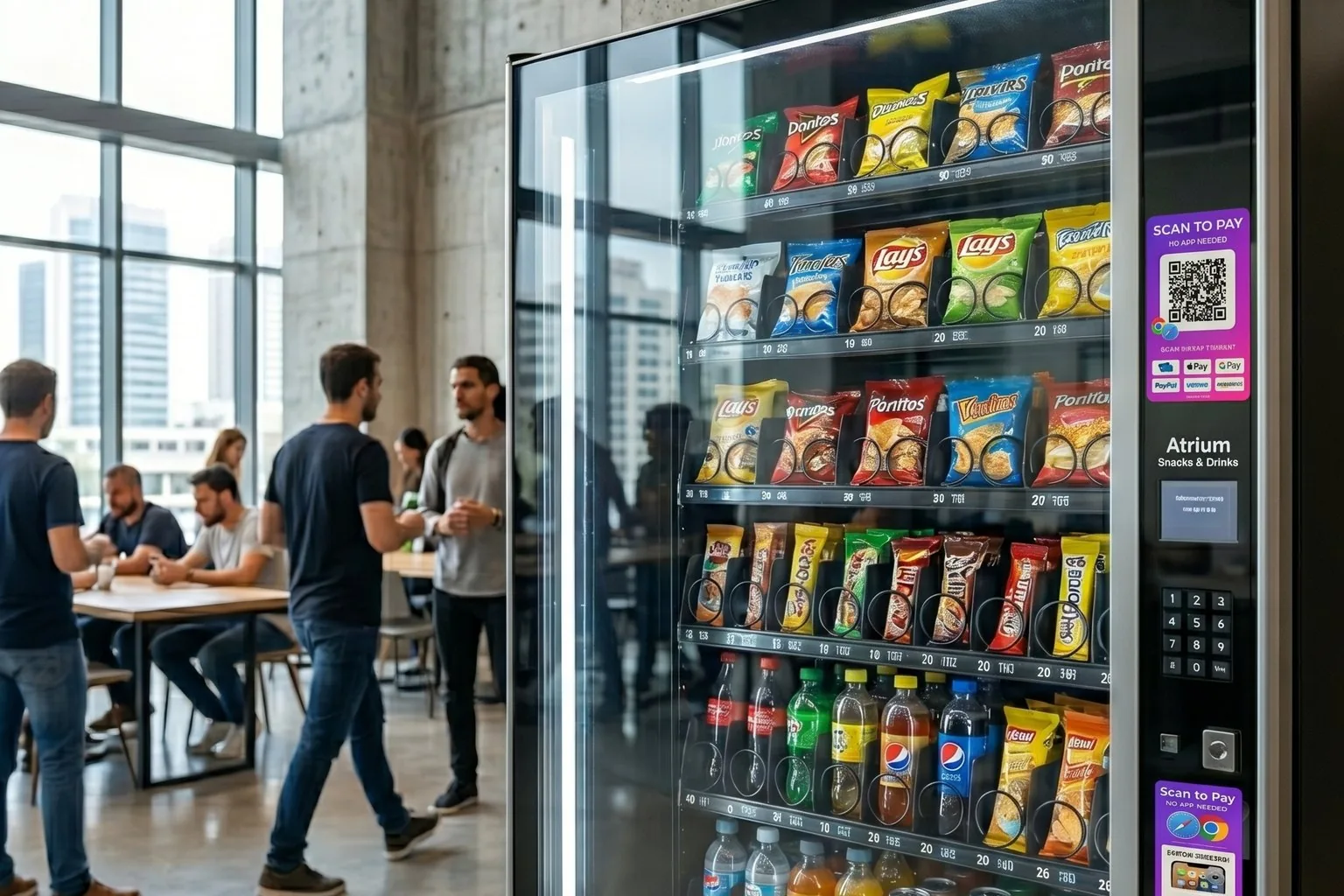
The best unattended payment solutions do two jobs. They let a customer pay at a machine with no staff nearby, and they help the operator earn more from that same machine. This list covers ten options and solution types, who each one suits, and what to check before you roll one out.
Cashless is already the main way people pay at machines. In 2024, cashless payments made up 71% of vending machine sales, and the average cashless purchase was $2.24 against $1.78 for cash, according to transaction data reported by PaymentsJournal. So the question for most operators has moved on from whether to accept cashless. The question now is what the payment moment can do for revenue per machine.
1. StreamPay
StreamPay is the intelligence layer for unattended machines. It suits operators who want every machine to sell more, and who want to run a growing fleet with less manual work.
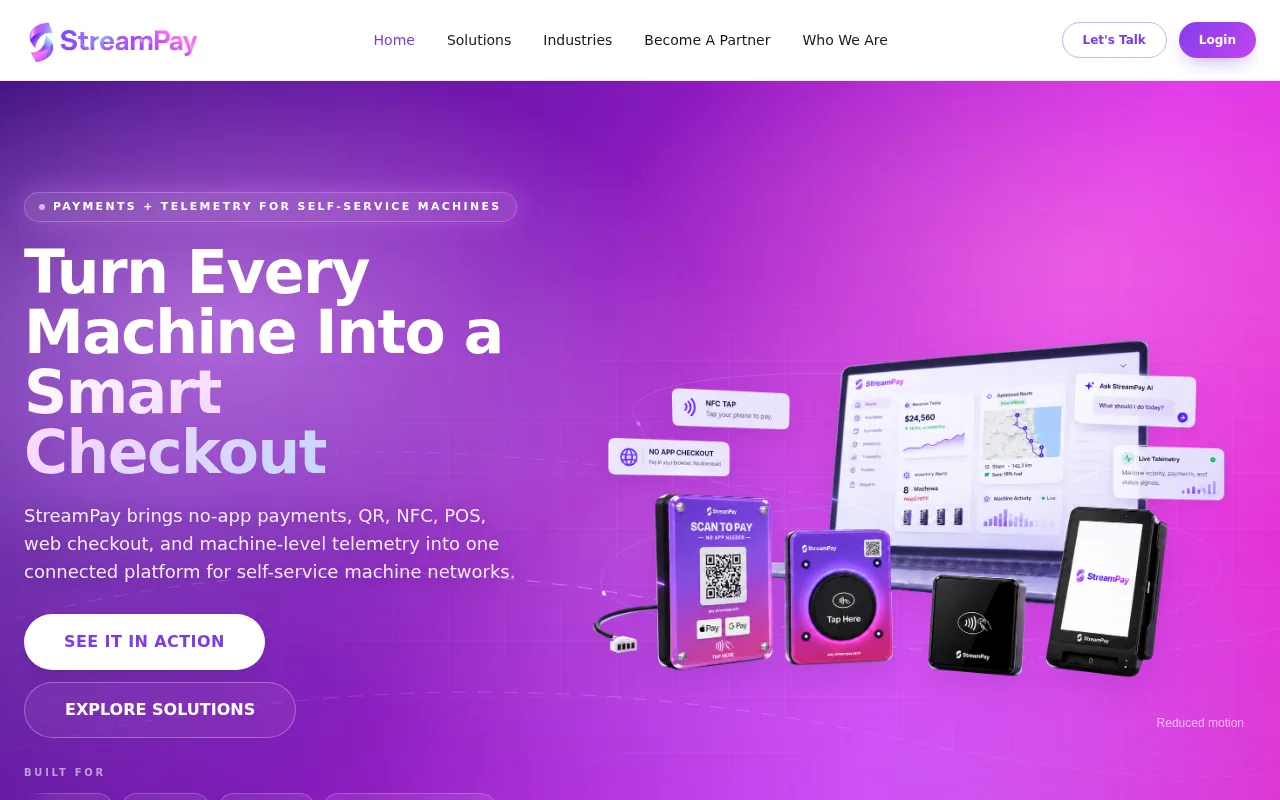
The core of StreamPay is a checkout that opens on the customer's own phone. There is no app to download and no account to create. The customer pays in the browser with Apple Pay, Google Pay or a card, and the machine starts. Because the checkout is a real online store page, the operator can do things a plain card reader cannot: suggest an upsell or a bundle, run a loyalty program, sell a membership or a subscription, offer stored value, or verify age before a restricted sale.
That is the difference for revenue. A reader takes the payment. A phone checkout can also grow the basket and bring the customer back. StreamPay supports 80+ payment methods and 40+ currencies across 110+ countries, so the same setup works for an operator with sites in several markets.
StreamPay also covers card-present payments, with an NFC Reader and a TSYS-certified Android POS for sites where customers expect to tap a card. Machines connect through standard interfaces such as MDB and pulse, so existing equipment stays in place. See the StreamPay phone checkout kit for existing machines for the retrofit option.
On the operations side, AI tools help a small team manage more machines. An operator copilot answers questions about the fleet, inventory forecasting flags what to restock, and route planning cuts wasted visits. Choose StreamPay when the goal is more revenue per machine and lower labor cost per machine, across vending, laundry, car wash, arcade, kiosk, EV charging and parking.
2. TNS Orchestrate
TNS Orchestrate is a cloud-native payment orchestration platform. It suits larger organizations that need to coordinate payments across unattended, in-person and online environments.
TNS describes a flexible payment stack that can connect payment methods, processors, banks and other service providers, with centralized management and routing across channels. That makes it worth assessing when your project is about payment infrastructure across a broad network, and less about the checkout experience at one machine type.
Ask how the proposed setup connects to your specific machine controls and what operators can monitor from a central view. Those details shape the day-to-day fit.
3. SecureGlobalPay
SecureGlobalPay is a merchant services provider for businesses setting up unattended payments. It may suit an operator who needs help aligning payment processing, gateway configuration and terminal integration.
An unattended setup can involve a terminal, a gateway, a processor, machine software and connectivity. Several systems must respond correctly after an approval, a decline, a timeout or a lost connection. Before deployment, map the full customer journey and confirm that machine records can be matched to payment records.
Consider this option when you need support with the processing setup as well as the payment device. Your machine type and existing equipment should guide the discussion.
4. No-App Phone Checkout Platforms
No-app phone checkout platforms let a customer pay on their own phone at the machine. They suit operators who want a fast payment and a direct channel to the customer, without asking anyone to install an app.
The customer opens a web checkout at the machine, picks a product or an amount, and pays with a wallet or a card. Because the screen belongs to the customer, the operator has room to show an offer, a bundle or a loyalty balance. A small card reader has no space for that. This is the category StreamPay leads with, and it is the reason its operators think in revenue per machine and not only in accepted payments.
Test the flow at the real location. A customer beside a washer needs a simple cycle choice. A driver at a car wash needs to see the payment option before entering the bay.
5. Unattended Card-Reader Solutions
Unattended card-reader solutions add a tap or insert device to a machine or kiosk. They suit locations where customers expect to pay with a physical card.
Check the site conditions before you choose hardware. An outdoor car wash faces different exposure from an indoor vending machine, and the device has to fit the enclosure and the customer path. Confirm how the reader connects to the machine and how the machine responds after an approval.
A reader on its own handles the payment and stops there. If you want the reader and a phone checkout on the same machine, StreamPay offers both, so each customer pays the way they prefer.
6. Smart POS-Integrated Payment Solutions
Smart POS-integrated payment solutions combine a payment terminal with a touchscreen checkout. They suit kiosks, ordering points and machines where customers make several choices before paying.
A touchscreen can guide a customer through a more involved purchase than a single tap. The screen and the flow need to match the task. A compact machine selling one item may not need a full terminal, while a self-service kiosk may need room for several steps.
StreamPay's Android POS is its full-screen option, and it sits alongside the phone checkout and the NFC Reader. Compare the StreamPay payment options for unattended machines before you set a standard across your sites.
7. MDB-Compatible Vending Payment Solutions
MDB-compatible vending payment solutions connect payment equipment to vending machine controls. They suit operators who want to add cashless payment and keep the machine's core operation in place.
Compatibility depends on the machine and the payment hardware. Check the machine's interface, the connection the payment device supports, and how the vend command follows an approved transaction.
StreamPay supports standard MDB and pulse interfaces. That helps an operator plan a retrofit across a mixed fleet without replacing machines that still work well.
8. Self-Service Kiosk Payment Solutions
Self-service kiosk payment solutions let customers complete a purchase or a service task without a cashier. They suit retail kiosks, ticketing points, parking stations and similar locations.
The kiosk may guide a customer through choosing an item, a service or a ticket before payment. That makes the screen flow part of the payment decision. A simple pay station may need only a reader, while a retail kiosk can need a larger display and more steps.
Decide first how much of the journey should happen on the kiosk screen and how much can move to the customer's phone. Moving steps to the phone can shorten the line at a busy kiosk.
9. EV Charging and Parking Payment Platforms
EV charging and parking payment platforms handle transactions at outdoor sites spread across many locations. They suit operators who need payment to fit a charger, a meter, a kiosk or a parking flow.
Start with how drivers reach the payment point. A charger may need payment beside the unit, while a parking site may use a separate pay station. In both cases, check connectivity and how the payment status reaches the equipment.
StreamPay covers EV charging and parking alongside its other machine segments. One cloud platform lets an operator review activity across different site types, without running each type as a separate network.
10. Arcade and Amusement Cashless Systems
Arcade and amusement cashless systems let players pay at individual games and rides. They suit operators of claw machines, prize games, kiddie rides, pinball and other unattended attractions.
This is a segment where the payment method changes spend. In amusement machines, cashless made up an average of 73% of sales volume in 2022, and the average cashless play purchase was $5.32 against 93 cents for cash, based on reader network data reported by Vending Times. A player who is not limited by the coins in a pocket plays more.
StreamPay adds a further step with play bundles and gamified offers on the player's phone. In the United States, arcade operators work with ArcadePay, powered by StreamPay. See the StreamPay arcade and amusement page for the regional options.
Quick Comparison: Match the Solution to Your Machines
The right fit depends on the machine, the payment moment and what you want the payment to do for the business. Use this table to narrow the shortlist before you check hardware compatibility.
| Solution | Good fit for | Check before rollout |
|---|---|---|
| StreamPay | Operators who want more revenue per machine, phone checkout plus card-present, and AI operations | Machine interface and the customer journey you want to run |
| TNS Orchestrate | Payment orchestration across several channels | Fit with the machine network and operator workflow |
| SecureGlobalPay | Projects that need help coordinating processing and integration | Full payment and machine response journey |
| No-app phone checkout | Machines where customers can pay on their own phones | Signage, network access and checkout steps |
| Card reader or smart POS | Card-first checkout or a screen-led customer flow | Site exposure, mounting and machine connection |
| MDB or pulse setup | Vending and other machines with compatible controls | Interface support and vend response |
| Kiosk, EV, parking or arcade setup | Purpose-built self-service sites and machines | Customer path, connectivity and remote oversight |
For a fleet, compare the whole operating workflow and the revenue tools, and treat the reader as one part of it. For a single kiosk, a focused payment terminal may be enough.
Frequently Asked Questions
What is an unattended payment solution?
An unattended payment solution lets a customer pay at a machine or terminal with no cashier involved. It can be a card reader, a checkout on the customer's phone, or a touchscreen POS. The system also passes the result to the machine, so the product or service starts after approval.
Which payment methods can an unattended machine accept?
An unattended machine can accept contactless cards, chip cards, mobile wallets such as Apple Pay and Google Pay, and local payment methods, depending on the solution. StreamPay supports 80+ payment methods through its phone checkout, plus card-present payments on its NFC Reader and Android POS.
Can I add cashless payments to a machine I already own?
Yes, in most cases. Cashless payment can be added to an existing machine when the payment hardware supports its interface. Check whether the machine uses MDB, pulse or another connection, then test that an approved payment triggers the correct vend or cycle. Confirm compatibility before you order equipment for a whole fleet.
How can a payment solution increase revenue per machine?
A payment solution raises revenue per machine when it does more than accept the payment. Cashless customers already tend to spend more per purchase than cash customers, as the vending data above shows. A phone checkout adds upsells, bundles, loyalty, memberships and subscriptions on top, which give customers a reason to spend more and to return.
Do customers need to download an app?
No, not with a browser-based phone checkout. The customer opens the checkout at the machine and pays with a wallet or a card in a few taps. Removing the app download matters at a machine, because most people will not install an app for a small purchase.
What should operators compare before choosing a provider?
Compare payment methods, machine compatibility, checkout steps, revenue tools and the operations software you get after installation. Ask how payment results reach the machine and what you can manage remotely. For a fleet, check that every location and machine type can be run from one platform.
How to Pick From This List
Start with the outcome you want. If you only need to accept cards at one machine, a reader will do the job. If you want each machine to earn more and your team to manage more machines with less effort, look for a phone checkout with revenue journeys and an operations platform behind it. That is where StreamPay fits. Review your machine interfaces, then book a StreamPay demo or email info@streampay.tech.
Ready to modernize your unattended fleet?
See how StreamPay unifies payment hardware, machine telemetry, and cloud operations.
or email info@streampay.tech